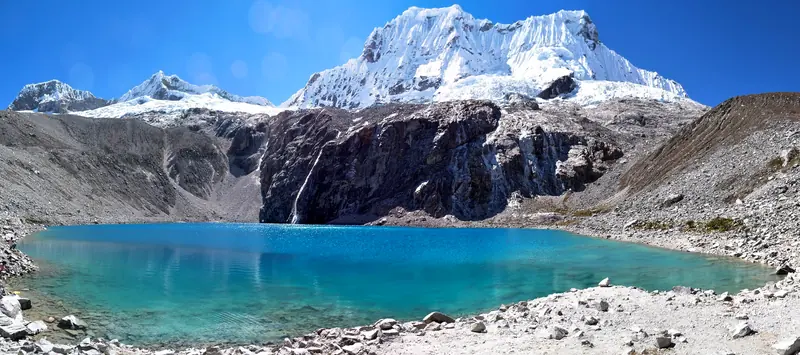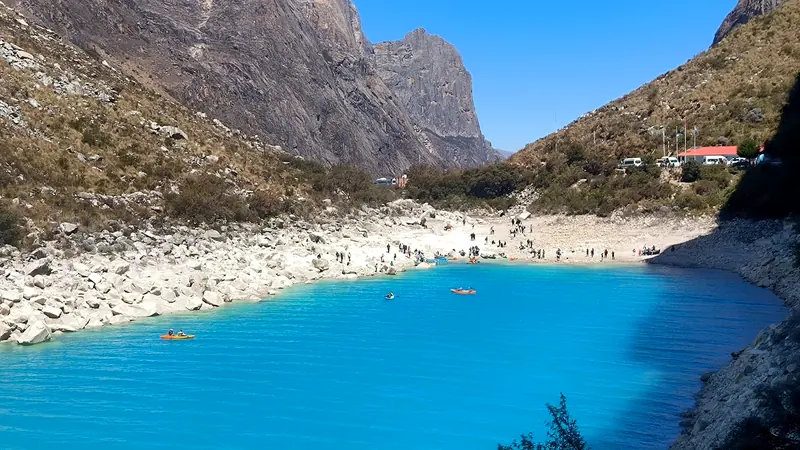
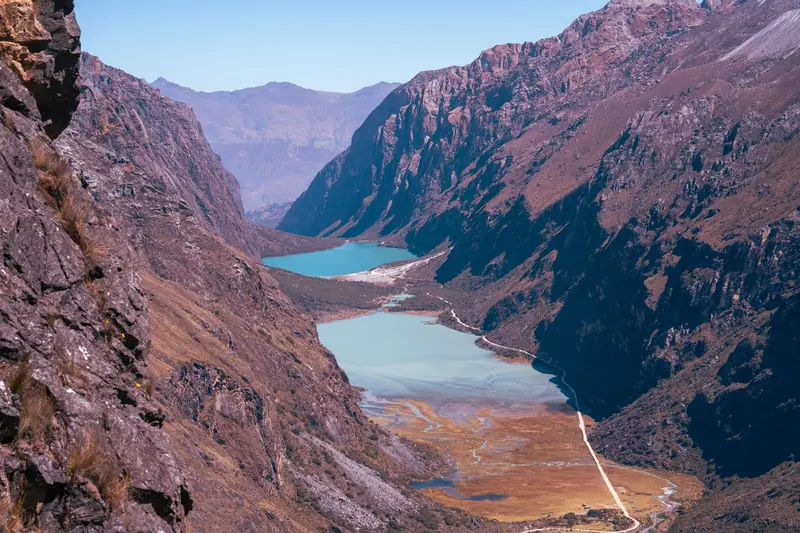
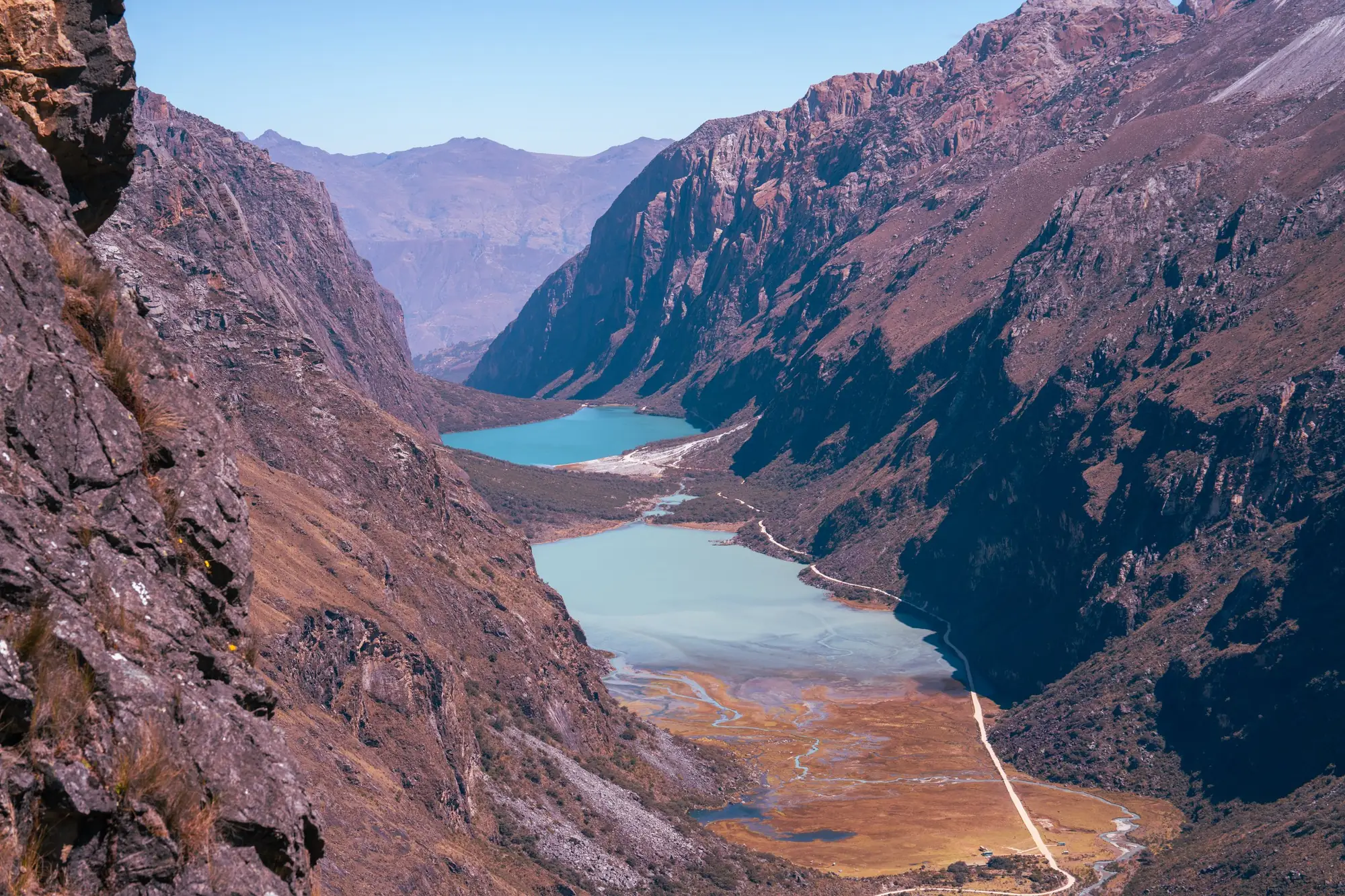

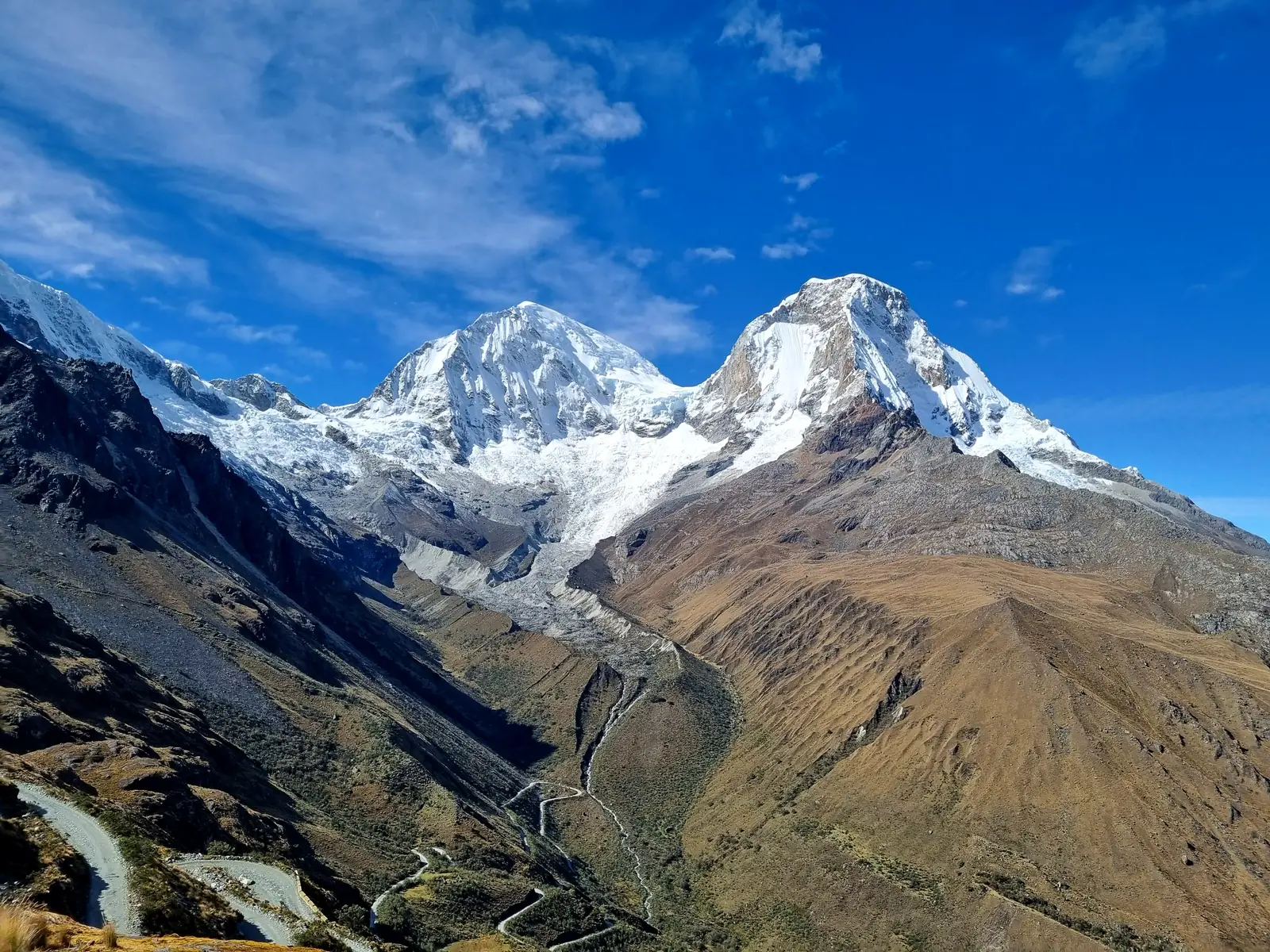
The Llanganuco tour is a full-day private bus trip from Huaraz to the Chinancocha and Orconcocha lakes, in the Llanganuco valley, 84 km from Huaraz between Huascarán and Huandoy peaks, inside Huascarán National Park. We leave at 7:00 a.m., and the road climbs to the Portachuelo pass at about 4,750 m (15,580 ft), with views of Huascarán, Huandoy, Chopicalqui, Pisco and Chacraraju. There is almost no hiking: just short walks at the lakes. You enter with a park ticket: S/ 30 at the general rate (SERNANP, 2026).
- Duration
- Full day
- Max. altitude
- 4,750 m
- Difficulty
- Easy
- Departs from
- Huaraz, 7:00 a.m. (private bus)
- Price
- Ask for price
Park ticket and rules at Llanganuco (2026)
Llanganuco is inside Huascarán National Park. According to SERNANP (2026), a one-day ticket costs S/ 30 at the general rate (foreign visitors), S/ 12 for Peruvian adults and S/ 5 for Peruvian children aged 5 to 16; children under 5 enter free. Unlike Laguna 69, tickets for the Chinancocha area are still sold directly to visitors, online or at the control post (Gestión, Jan 27, 2026).
You must register at the control post, stay on marked trails and carry out all your trash. The María Josefa trail is fragile and can only be visited with prior registration at the park office or the Llanganuco control post (park visitor regulations, 2006).
Highlights
- Chinancocha lake at 3,850 m and Orconcocha a little higher, set between steep rock walls.
- The Portachuelo pass at about 4,750 m, the highest point of the day, with views of Huascarán, Huandoy, Chopicalqui, Pisco and Chacraraju.
- Llanganuco is the most visited area of Huascarán National Park (Andina, Peru's state news agency).
- Almost no hiking: a good way to acclimatize and preview the road to Laguna 69 before you hike it.
Itinerary
- 7:00 a.m.Departure from Huaraz by private bus
We drive north through the Callejón de Huaylas, past Carhuaz, to Yungay.
- MorningLlanganuco valley
From Yungay we turn east and drive about 25 km up the valley to the Llanganuco control post, where the group registers and shows the park ticket.
- MorningChinancocha lake
Stop at the lake, at 3,850 m: a short walk along the shore, the visitor center and, if you like, a boat ride.
- MiddayOrconcocha lake
We continue up the road to the second lake, a little higher, between Huandoy and Huascarán.
- MiddayPortachuelo pass
The bus switchbacks up to about 4,750 m. Stop to see Huascarán, Huandoy, Chopicalqui, Pisco and Chacraraju. Dress warmly: it is usually cold and windy.
- AfternoonBack to Huaraz
We drive back down the same road and return to Huaraz through the Callejón de Huaylas. End of the service.
Departure at 7:00 a.m. by private bus, according to our program. The tour takes the whole day; other times are approximate.
What's included and not included
What's included
- Private bus Huaraz – Llanganuco – Portachuelo – Huaraz
- Guide throughout the tour
Not included
- Huascarán National Park ticket (SERNANP, 2026): S/ 30 general one-day fee (S/ 12 for Peruvian adults)
- Meals: bring a packed lunch and snacks
What to bring
- A warm jacket: it is cold and windy at Portachuelo
- Warm hat, gloves and sunglasses
- Sunscreen and lip balm
- About 1 liter of water
- Packed lunch and snacks
- Comfortable shoes for short walks
- Passport or ID for the control post
- Some cash in Peruvian soles

More information
Which peaks you can see
The Llanganuco valley cuts through the Cordillera Blanca between Huascarán and Huandoy. From the lakes you look straight up at their walls, and as the bus switchbacks up to Portachuelo, Chopicalqui, Pisco and Chacraraju come into view.
| Peak | Altitude | Source |
|---|---|---|
| Huascarán Sur | 6,768 m | SERNANP and UNESCO |
| Huandoy (main summit) | 6,395 m | IGM maps |
| Chopicalqui | 6,354 m | SERNANP |
| Chacraraju | 6,112 m | SERNANP |
| Pisco (west summit) | 5,752 m | Wikipedia |
Huascarán Sur is the highest mountain in Peru. On cloudy days the summits may be hidden: the dry season, from May to September or October, brings clearer skies (SERNANP).
Who this tour is for
You spend most of the day on the bus and walk only as much as you like around the lakes. In an acclimatization plan, it fits between a first short hike, such as Laguna Churup, and Laguna 69, which uses the same road. Keep in mind that at Portachuelo you reach about 4,750 m, higher than Laguna 69, although only for a short stop and with no effort.
If you get a strong headache or feel dizzy, tell the guide: the right move is to go down. If you are traveling with young children, older adults or anyone with a heart or breathing condition, check with a doctor first. The full plan is in our Huaraz acclimatization guide.
Frequently asked questions
How high is Llanganuco?
Chinancocha lake sits at 3,850 m (12,630 ft) and Orconcocha a little higher. The highest point of the tour is the Portachuelo pass, at about 4,750 m.
How much walking is there on the Llanganuco tour?
Very little. It is a bus ride with stops; at the lakes you can take short walks along the shore at your own pace.
Is it the same as the Laguna 69 tour?
No. They share the road and the Llanganuco control post, but Laguna 69 is a 5 to 6-hour round-trip hike of 13 to 15 km that starts at Cebollapampa. On the Llanganuco tour there is no climb on foot: the bus continues to Portachuelo. Also, since February 9, 2026, Laguna 69 can only be visited with agencies that hold a contract with SERNANP.
How much is the park entrance fee?
According to SERNANP (2026), a one-day ticket to Huascarán National Park costs S/ 30 at the general rate (foreign visitors). Children under 5 enter free. You can buy it online on SERNANP's Tu Ticket platform or at the control post.
What time does the tour leave?
It leaves Huaraz at 7:00 a.m. by private bus and takes the whole day. We confirm the pick-up point when you book.
Is it a good acclimatization day?
Yes, because it takes almost no effort. But at Portachuelo you reach about 4,750 m: take it easy and tell the guide if you feel unwell. See our acclimatization guide.
When is the best time to go?
From May to October, in the dry season, according to SERNANP. From October to April it rains more, mostly in the afternoon, and clouds can hide the peaks, but the tour still runs.