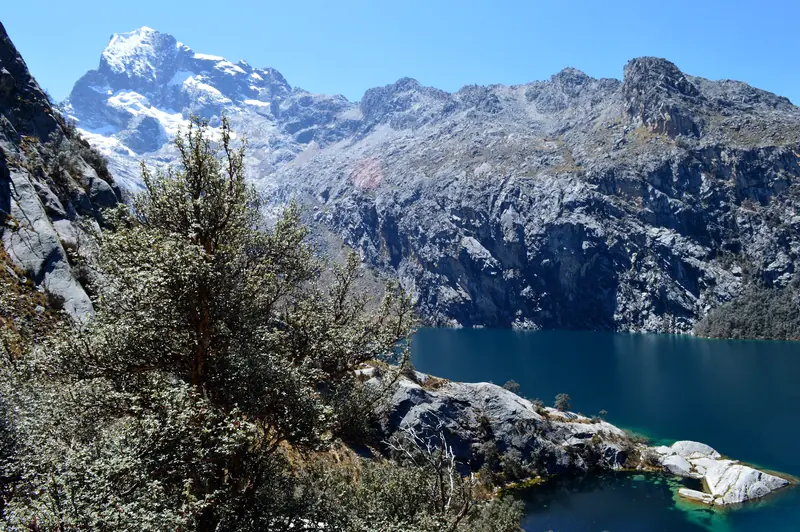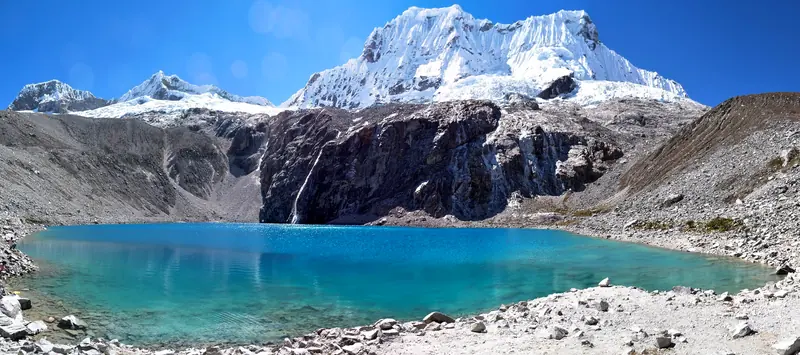
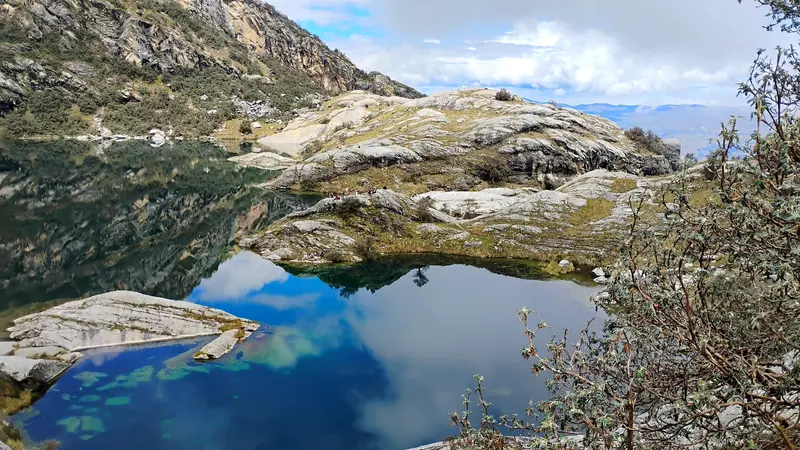
Huaraz sits at about 3,050 m (10,000 ft), above the 2,500 m (8,000 ft) mark where the CDC and Peru's Ministry of Health warn of altitude sickness. The first 2 to 3 days are the normal adjustment period, so we recommend at least two nights in Huaraz and a couple of lower acclimatization hikes before Laguna 69 (4,600 m). If headache, nausea or shortness of breath don't improve with rest, go down and get medical care.
At what altitude does altitude sickness start?
The risk starts above about 2,500 m (8,000 ft), according to the CDC and Peru's Ministry of Health. Huaraz, at about 3,050 m, is already in that range, and almost every hike in the area goes above 4,000 m (13,100 ft).
Symptoms of acute mountain sickness are headache, fatigue, loss of appetite, nausea and vomiting (CDC). If they show up after you gain altitude, treat them as altitude sickness and don't go higher until they ease.

A day-by-day acclimatization plan for Huaraz
This is the order we recommend at Angeles Expediciones. It is our agency's advice, not an official rule, and it follows CDC and Ministry of Health guidance: rest when you arrive, no hard exercise for the first 48 hours, and go up gradually.
- Day 1 · Arrive and rest (3,050 m)
Rest for the first few hours, drink plenty of fluids and eat light meals. No alcohol or strenuous exercise for the first 48 hours (CDC). A short, slow walk around Huaraz is fine.
- Day 2 · Easy outing
Take the Llanganuco tour, with lakes and mountain views and very little walking, or a gentle downhill walk in the Cordillera Negra from a pass at about 4,200 m. Either way, you sleep in Huaraz again.
- Day 3 · Altitude test
Hike to Laguna Churup (4,450 m / 14,600 ft): 4 to 6 hours round trip from Pitec, about 45 minutes from Huaraz, with a final rocky section with fixed ropes. If you would rather walk less, Laguna Paron (about 4,185 m) can be reached by car.
- Day 4 · Laguna 69 or the start of your trek
After three nights in Huaraz and two outings, you are ready to try the Laguna 69 hike (about 4,600 m / 15,090 ft) or to start a multi-day trek.
The CDC rule is about the altitude where you sleep. On day hikes you go up during the day and come back to sleep in Huaraz, at 3,050 m. On a trek, you sleep higher each night, which is why you should start one already acclimatized. See our multi-day treks.
CDC rules for a gradual ascent
The CDC sums up prevention in one idea: go up slowly. Its 2026 Yellow Book says initial acclimatization takes 3 to 5 days.
| CDC recommendation | What it means in Huaraz |
|---|---|
| Don't go from low altitude to more than 9,000 ft (2,750 m) in one day | Coming from Lima you can't avoid it, since Huaraz is at 3,050 m: that is why day one is a rest day. |
| No alcohol or heavy exercise for the first 48 hours | Don't do Laguna 69 or any other hard hike the day after you arrive. |
| Above 9,000 ft, don't raise your sleeping altitude more than 1,600 ft (about 500 m) a day | On day hikes you sleep in Huaraz; on a trek, check that campsites don't climb too fast. |
| For every 3,300 ft (about 1,000 m) gained, add an extra day without going higher | On long treks, look for an itinerary with rest days. |
Source: CDC, “Travel to High Altitudes” (reviewed August 16, 2022), and the CDC Yellow Book 2026.
Warning signs: when to descend immediately
Mild altitude sickness is handled with rest and by not going higher. But there are two serious conditions where the only right answer is to descend immediately. On a hike, tell your guide as soon as something feels wrong.
| Condition | Symptoms | What to do |
|---|---|---|
| Acute mountain sickness (AMS) | Headache, fatigue, loss of appetite, nausea, vomiting | Don't go higher. Rest and drink fluids. If it doesn't improve, descend and get medical care. |
| High-altitude cerebral edema (HACE) | Extreme fatigue, drowsiness, confusion, loss of coordination | Descend immediately. |
| High-altitude pulmonary edema (HAPE) | Shortness of breath, weakness, cough | Descend immediately; oxygen is probably needed. |
Peru's Ministry of Health adds that if nausea, a severe headache or shortness of breath persist after rest and painkillers, you should go to the nearest health center, and that for severe symptoms that rest doesn't fix, the most effective measure is not medication but going down to a lower altitude.
Medication and coca tea
Don't take acetazolamide without a prescription, Peru's Ministry of Health warns. If you plan to use any altitude medication, talk to your doctor before the trip. If you have high blood pressure or a heart rhythm condition, travel with your medication and a recent checkup.
Coca tea is a common Andean custom, but Peruvian government sources don't agree on whether it helps. Drink it if you like it, but don't rely on it: it is no substitute for rest and a gradual ascent.
What does help, according to the CDC and the Ministry of Health: rest when you arrive, drink plenty of fluids, eat light, skip alcohol for the first two days and go up gradually.
Altitude chart: Huaraz and its hikes
To plan your acclimatization, compare how much higher each destination is than Huaraz. The safe approach is to go from lower to higher.
| Place | Altitude | Above Huaraz | Source |
|---|---|---|---|
| Huaraz | 3,050 m (10,000 ft) | — | Wikipedia |
| Chinancocha lake (Llanganuco) | 3,850 m (12,630 ft) | +800 m | Wikipedia (Peru's tourism inventory) |
| Pitec, Laguna Churup trailhead | 3,850 to 3,900 m | +800 to 850 m | Wikipedia and published routes |
| Cordillera Negra pass (Punta Callán) | about 4,200 m (13,780 ft) | +1,150 m | Wikipedia and published routes |
| Laguna Paron | about 4,185 m (13,730 ft) | +1,135 m | Wikipedia |
| Laguna Rajucolta | 4,280 m (14,040 ft) | +1,230 m | CENEPRED |
| Laguna Churup | 4,450 m (14,600 ft) | +1,400 m | Wikipedia |
| Laguna 69 | about 4,600 m (15,090 ft) | +1,550 m | Wikipedia |
| Portachuelo de Llanganuco pass (by car) | about 4,750 m (15,580 ft) | +1,700 m | published routes |
| Nevado Pisco (west summit) | 5,752 m (18,870 ft) | +2,700 m | Wikipedia |
Rounded figures; sources differ by a few meters. A peak like Pisco needs a longer acclimatization and a mountain guide; since April 1, 2026, it can also only be climbed with agencies that hold a SERNANP contract. For Laguna 69 details, read our Laguna 69 guide.
FAQ
How many days do I need to acclimatize in Huaraz?
Peru's Ministry of Health considers the first 2 to 3 days the normal adjustment period, and the CDC says initial acclimatization takes 3 to 5 days. Our advice: at least two nights in Huaraz before a hard hike like Laguna 69.
Can I hike Laguna 69 the day after I arrive?
We don't recommend it. The CDC advises avoiding strenuous exercise for the first 48 hours above 2,500 m, and Laguna 69 climbs to about 4,600 m. Start with the Llanganuco tour or Laguna Churup.
What are the best acclimatization hikes in Huaraz?
The lower or shorter ones: a Cordillera Negra walk (downhill from about 4,200 m), Llanganuco (very little walking), Laguna Paron (about 4,185 m) and Laguna Churup (4,450 m), which is a good test before Laguna 69.
What can I do in Huaraz while acclimatizing?
On your first day, rest and take a slow walk around town. On days two and three, choose outings that go up during the day and bring you back to sleep in Huaraz, such as Llanganuco or Laguna Churup. Browse our day tours from Huaraz.
Can I take acetazolamide for altitude sickness?
Only with a prescription. Peru's Ministry of Health specifically warns against taking it on your own. Talk to your doctor before the trip.
Does flying instead of taking the bus change anything?
Not for acclimatization: either way you go from the coast to 3,050 m in a single day. Count your arrival day as a rest day.
Sources
- MINSA · Recomendaciones para prevenir el mal de altura (2026-04-04)
- CDC · Travel to High Altitudes
- CDC Yellow Book 2026 · High-Altitude Travel and Altitude Illness
- Wikipedia · Huaraz
- Wikipedia · Laguna Churup
- Wikipedia · Laguna Parón
- Wikipedia · Lake 69
- Wikipedia · Llanganuco Lakes
- CENEPRED · Informe técnico de la laguna Rajucolta (2016)
- Wikipedia · Nevado Pisco