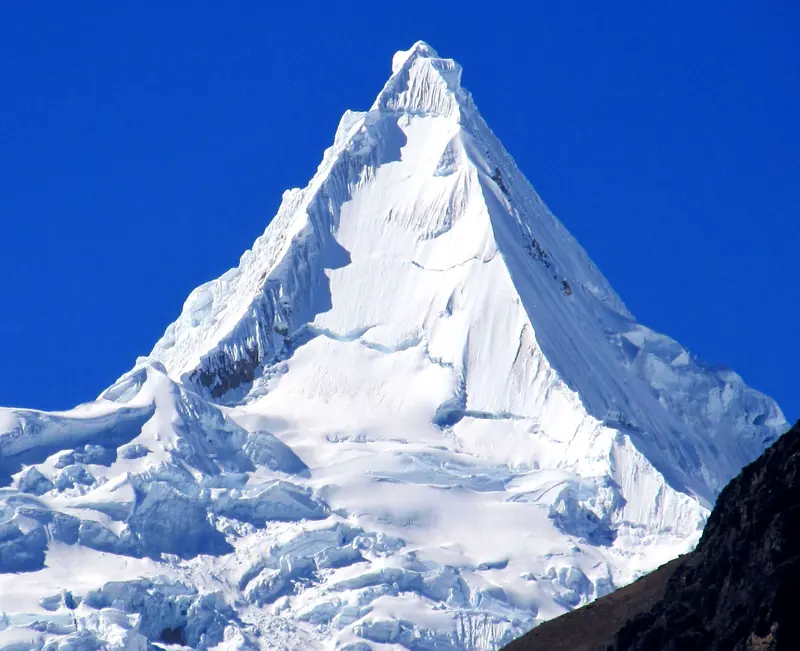
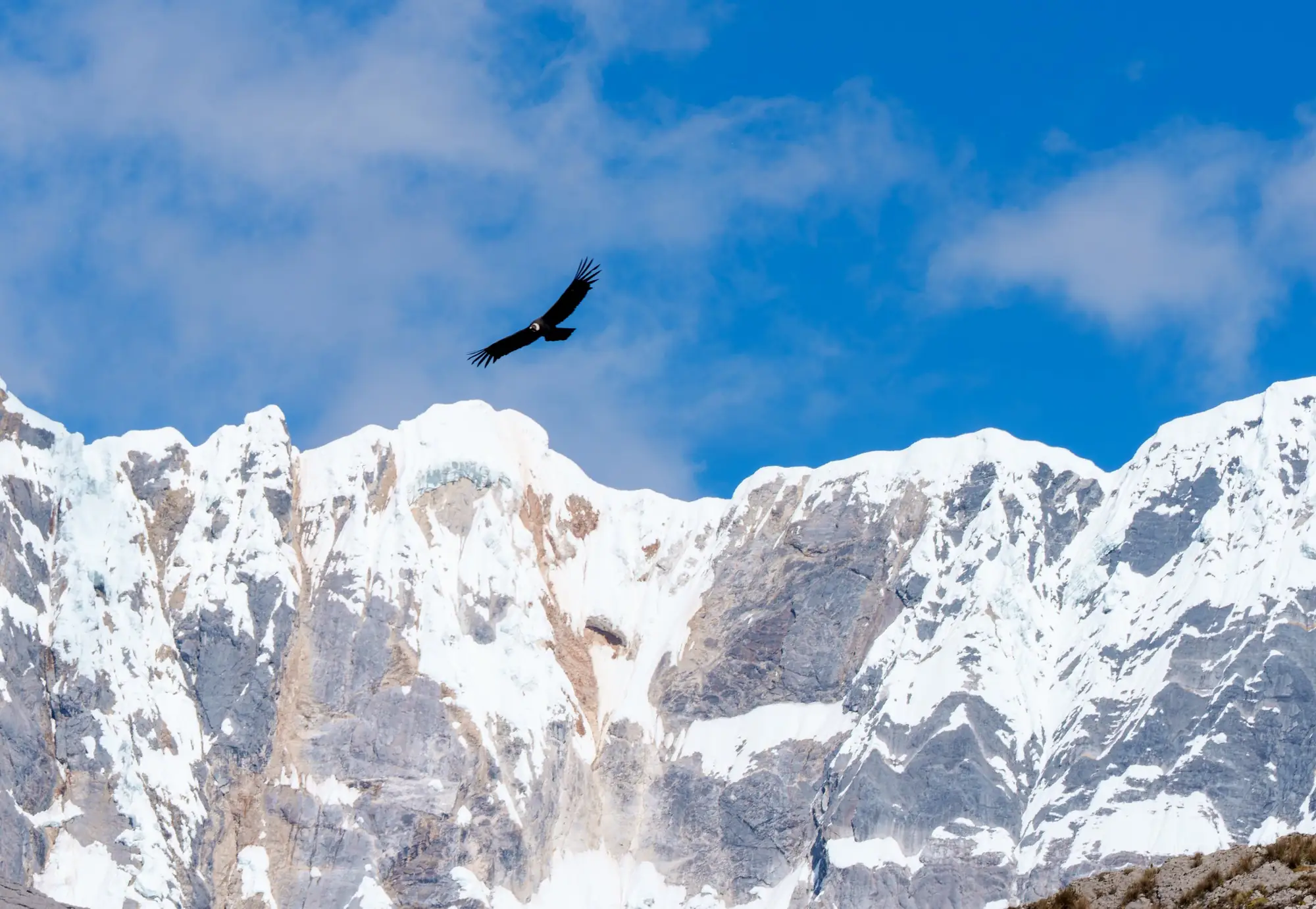
The Alpamayo trek is a traverse of Peru's Cordillera Blanca around Alpamayo, 5,947 m (19,510 ft), the peak the German climbing magazine Alpinismus named “the most beautiful mountain in the world” in 1966. We run it on two routes from Hualcayán: 10 days to Vaquería, over seven passes between 4,360 and 4,800 m, or 12 days to Cashapampa, which adds Punta Unión pass (4,750 m) and the Santa Cruz valley. The highest pass is Caracara, at 4,800 m (15,750 ft). The whole route lies inside Huascarán National Park: you need the 4-to-30-day park ticket (S/ 150 at the general rate, SERNANP 2026), and park rules require trekking through a tourism service provider.
- Duration
- 10 or 12 days
- Max. altitude
- 4,800 m
- Difficulty
- Very challenging
- Departs from
- Huaraz, 6:00 a.m. (private bus)
- Price
- Ask for price
Huascarán National Park rules for the Alpamayo trek
Alpamayo lies inside Huascarán National Park. For a 10 or 12-day trek you need the 4-to-30-day ticket: S/ 150 at the general rate for foreign visitors and S/ 75 for Peruvian adults (SERNANP, 2026). Children under 5 enter free.
The park's Tourism and Recreation Regulations (Jefatural Resolution 196-2006-INRENA, art. 7.1) state that adventure tourism, including trekking, is done through a tourism service provider that is responsible for visitor safety. You must also register at the control post, stay on marked trails and leave no trash.
Highlights
- See Alpamayo (5,947 m) up close from the Jancarurish valley, with a free day to hike to its lake.
- Seven passes between 4,360 and 4,800 m on the 10-day route and eight on the 12-day route, with Caracara (4,800 m) the highest.
- Two endings: Vaquería, down the Huaripampa valley, or Cashapampa, over Punta Unión and down the whole Santa Cruz valley.
- Arrieros (muleteers) and their pack animals carry the camp, so you hike with a light daypack.
Day-by-day itinerary: two routes
10-day route: Hualcayán to Vaquería
- Day 1Huaraz – Hualcayán – Huishcash
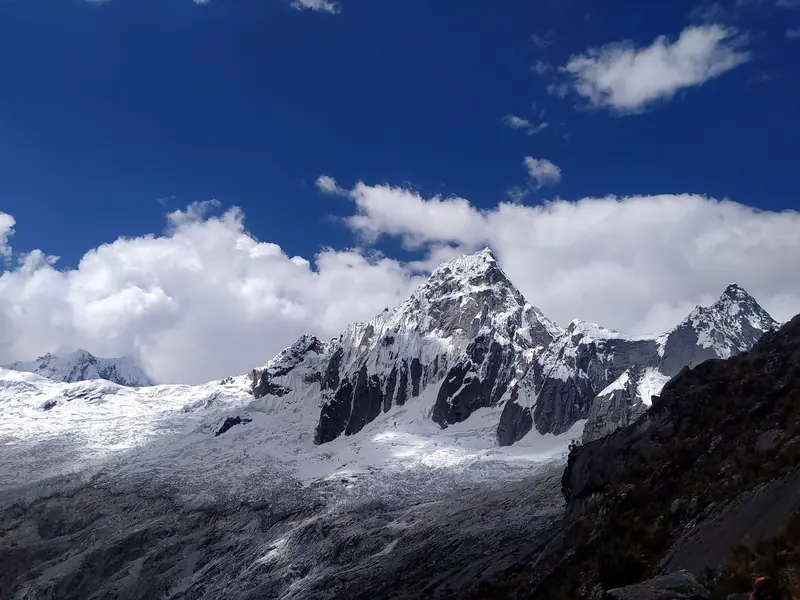
We leave at 6:00 a.m. by bus, heading north through the Callejón de Huaylas and, past Caraz, up to Hualcayán (3,115 m). From there we hike uphill, with the Cordillera Negra behind us and Champará, the northernmost peak of the Cordillera Blanca, in view. Camp at Huishcash (4,250 m).
- Day 2Huishcash – Laguna Cullicocha – 4,780 m pass – Osoruri
We keep climbing past the Azulcocha and Cullicocha lakes, facing the peaks of the Santa Cruz massif, to a pass at 4,780 m. We descend to the Osoruri campsite (4,480 m).
- Day 3Osoruri – Osoruri pass (4,670 m) – Jancarurish
A short climb to Osoruri pass (4,670 m), with views of Laguna Milluacocha and Pilanco peak. We descend into the Alpamayo valley and camp at Jancarurish (4,200 m), facing Alpamayo's classic pyramid.
- Day 4Jancarurish: free day
A rest day, or an optional hike to Laguna Jancarurish for a closer look at Alpamayo.
- Day 5Jancarurish – Caracara pass (4,800 m) – Moyobamba valley
We climb to Caracara pass (4,800 m), the highest of the trek and one of the coldest in the range, where strong winds are possible. We descend to camp in the Moyobamba valley.
- Day 6Moyobamba valley – 4,500 m pass – Huillca valley
We climb to a 4,500 m pass with views of the east faces of Pucahirca and Alpamayo, then descend through the Tayabamba and Huillca valleys to camp (4,200 m).
- Day 7Huillca valley – Yanajanca pass (4,560 m) – Jancapampa
We cross Yanajanca pass (4,560 m), again with Pucahirca in view, and descend to camp at Jancapampa (4,000 m).
- Day 8Jancapampa – Tupatupa pass (4,360 m) – Laguna Huecrococha
We cross Tupatupa pass (4,360 m) and descend through the Tuctubamba valley to the campsite at Laguna Huecrococha.
- Day 9Laguna Huecrococha – Alto Pucaraju pass (4,630 m) – Paria
We climb to Alto Pucaraju pass (4,630 m), facing Taulliraju, Paria and Chacraraju, and descend into the Paria valley. Camp at 3,900 m.
- Day 10Paria – Vaquería – Huaraz
We hike through the Huaripampa valley, with Chacraraju and Chopicalqui in view, and up to Vaquería, where the bus is waiting to take us back to Huaraz.
Times from our agency program: expect 5 to 6 hours of hiking a day. Group pace and weather can change them. Pass and campsite altitudes from our itinerary.
12-day route: Hualcayán to Cashapampa
- Days 1 to 8Huaraz – Hualcayán – Laguna Huecrococha
Same as the 10-day route: 6:00 a.m. departure, Hualcayán and Huishcash, the Azulcocha and Cullicocha lakes, Osoruri, a free day at Jancarurish facing Alpamayo, and the Caracara (4,800 m), Yanajanca (4,560 m) and Tupatupa (4,360 m) passes to Laguna Huecrococha.
- Day 9Laguna Huecrococha – Alto Pucaraju pass (4,630 m) – Tuctu valley
We climb to Alto Pucaraju pass (4,630 m), facing Taulliraju, Paria and Chacraraju, and descend to camp in the Tuctu valley (4,200 m).
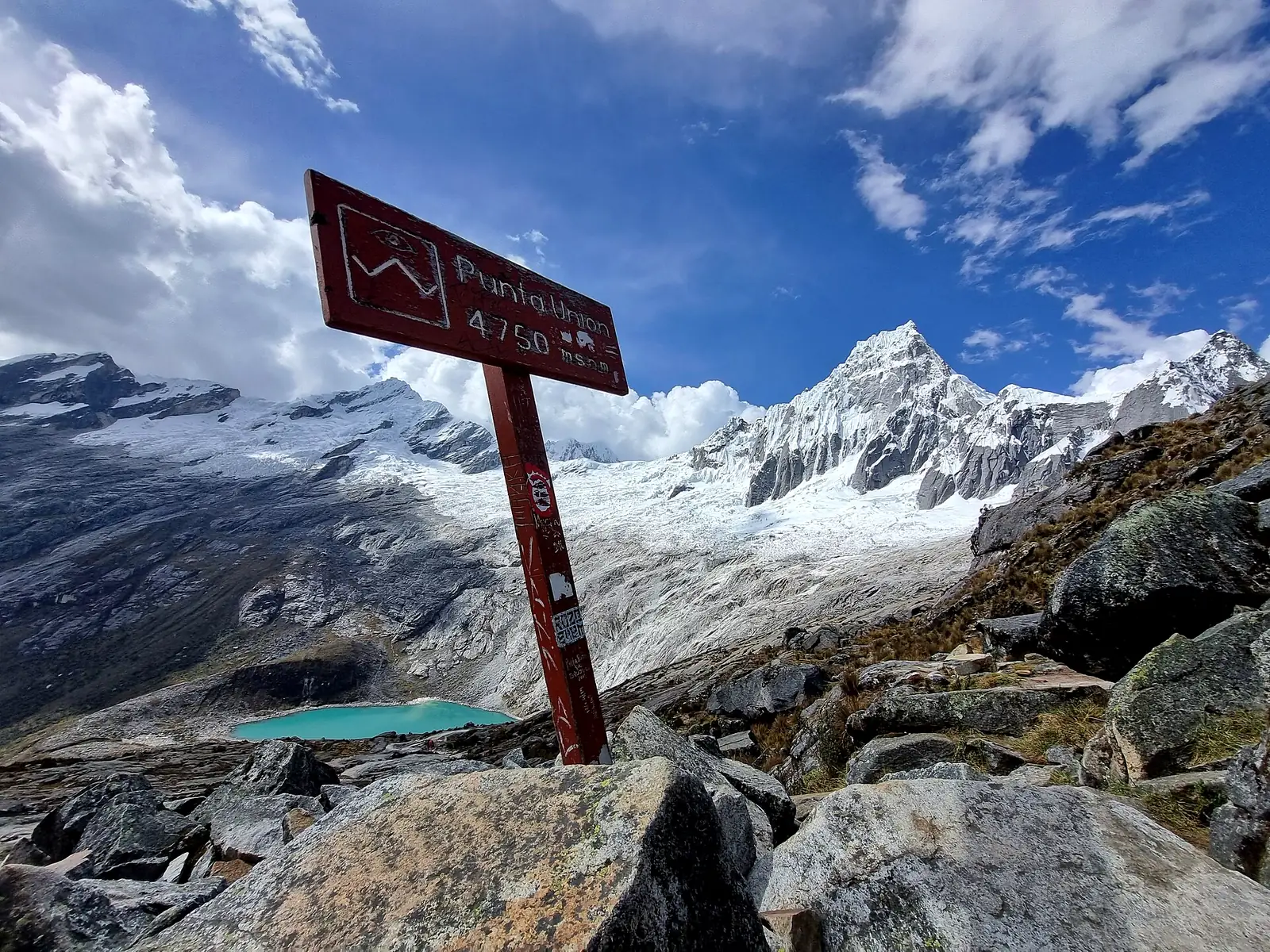
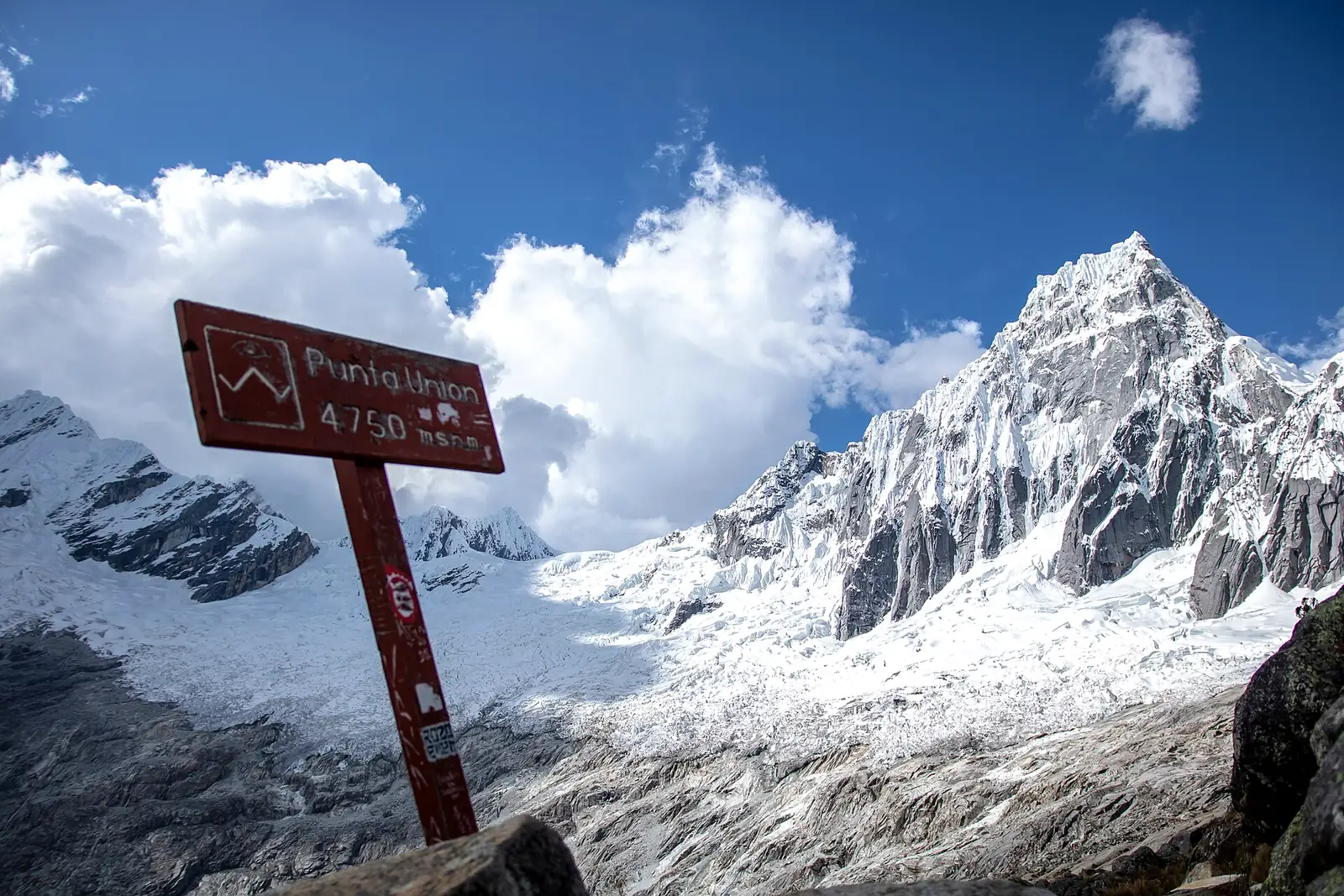
- Day 10Tuctu valley – Punta Unión (4,750 m) – Taullipampa
We climb to Punta Unión (4,750 m), with views of Artesonraju, Taulliraju, Rinrijirca, Pucaraju, Santa Cruz peak and Laguna Taullicocha. We descend to the Taullipampa campsite (4,200 m).
- Day 11Taullipampa – Llamacorral
We walk down the Santa Cruz valley to Quishuarpampa, with Alpamayo and Quitaraju in view, and on to the Llamacorral campsite (3,750 m).
- Day 12Llamacorral – Cashapampa – Huaraz
We follow the valley down to the village of Cashapampa and return to Huaraz by private bus.
Times from our agency program: expect 5 to 6 hours of hiking a day. Group pace and weather can change them. Pass and campsite altitudes from our itinerary.
What's included and not included
What's included
- Bus transport Huaraz – Hualcayán and Vaquería or Cashapampa – Huaraz
- Guide for the whole trek
- Cook
- Arrieros (muleteers) and pack animals
- Camping equipment
Not included
- Huascarán National Park 4-to-30-day ticket (SERNANP, 2026): S/ 150 general rate (S/ 75 for Peruvian adults)
- Travel insurance: we recommend a policy that covers mountain rescue and evacuation
What to bring
- Sleeping bag rated below freezing
- Broken-in hiking boots with good grip
- Layers: thermal base layer, fleece and a down jacket
- Waterproof jacket and pants
- Warm hat, gloves, neck gaiter and sunglasses
- Sunscreen and lip balm
- Headlamp with spare batteries
- Water bottles and purification tablets or a filter
- Trekking poles
- Daypack of 25 to 35 liters
- Passport for registration at the park control post
- Your personal medication (acetazolamide only with a prescription, as Peru's Ministry of Health advises)

More information
Two routes: 10 days to Vaquería or 12 days to Cashapampa
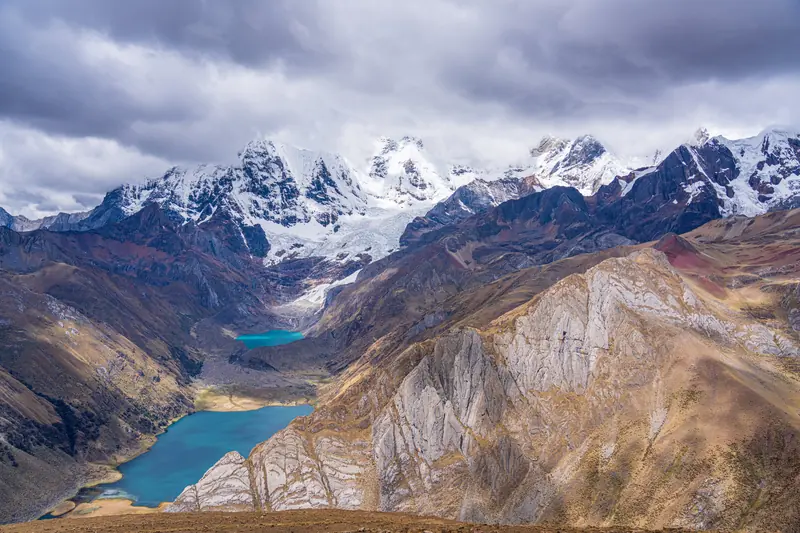
Both routes share the first eight days. They start in Hualcayán (3,115 m), climb past the Azulcocha and Cullicocha lakes and cross two passes into the Jancarurish valley, facing Alpamayo's classic pyramid, where day 4 is free. Next comes Caracara (4,800 m), one of the highest and coldest passes in the range, where strong winds are possible, followed by three more passes through the Moyobamba, Huillca and Jancapampa valleys, with Pucahirca in view.
On day 9 you cross Alto Pucaraju (4,630 m), and there the routes split. On the 10-day route you descend to the Paria valley and hike out the next day through the Huaripampa valley to Vaquería. On the 12-day route you camp in the Tuctu valley, cross Punta Unión (4,750 m) and walk down the whole Santa Cruz valley to Cashapampa, the same final stretch as our Santa Cruz trek. Another variant, the Cedros–Alpamayo trek, ends in Pomabamba: ask us if you are interested.
Note that this trek does not climb Alpamayo. The ascent is a 5 to 7-day expedition for experienced mountaineers, with a final wall of about 400 m (SERNANP). We cover it on our climbing page.
| Day | Pass | Campsite |
|---|---|---|
| 1 | — (climb from Hualcayán, 3,115 m) | Huishcash, 4,250 m |
| 2 | Pass above Laguna Cullicocha, 4,780 m | Osoruri, 4,480 m |
| 3 | Osoruri pass, 4,670 m | Jancarurish, 4,200 m |
| 4 | Free day | Jancarurish, 4,200 m |
| 5 | Caracara, 4,800 m | Moyobamba valley |
| 6 | Pass into the Huillca valley, 4,500 m | Huillca valley, 4,200 m |
| 7 | Yanajanca, 4,560 m | Jancapampa, 4,000 m |
| 8 | Tupatupa, 4,360 m | Laguna Huecrococha |
| 9 | Alto Pucaraju, 4,630 m | 10 days: Paria valley, 3,900 m · 12 days: Tuctu valley, 4,200 m |
| 10 | 10 days: hike out to Vaquería · 12 days: Punta Unión, 4,750 m | 12 days: Taullipampa, 4,200 m |
| 11 | 12 days: down the Santa Cruz valley | 12 days: Llamacorral, 3,750 m |
| 12 | 12 days: hike out to Cashapampa | — |
Pass and campsite altitudes: our agency itinerary. Alpamayo: 5,947 m (Wikipedia; Andina). Ascent and park fees: SERNANP.
How hard is the Alpamayo trek? Fitness and acclimatization
It is a very demanding trek: 10 or 12 straight days, seven or eight passes between 4,360 and 4,800 m, about 5 to 6 hours of hiking a day, cold nights in a tent and weather that changes fast. It involves no technical climbing, but you need good fitness and, ideally, previous multi-day trekking experience.
The first night is already at 4,250 m (13,940 ft), at Huishcash. That is why we ask you to arrive in Huaraz (about 3,050 m / 10,000 ft) at least 3 or 4 days before the start and do two day hikes first, such as Laguna Churup and Laguna 69. The CDC notes that initial acclimatization takes 3 to 5 days and recommends that, above 2,750 m (9,000 ft), you raise your sleeping altitude by no more than about 500 m (1,600 ft) per day.
If you have confusion, loss of coordination, shortness of breath at rest or a strong headache that does not ease with rest, the right move is to go down (CDC; Peru's Ministry of Health). The full plan is in our Huaraz acclimatization guide.
Best time for the Alpamayo trek
SERNANP recommends visiting Huascarán National Park from May to October: the dry season runs from May to September or October, and the rainy season from October to April. We recommend the trek in the dry season: more clear days to see Alpamayo and passes without mud, in exchange for very cold nights at the high camps.
In the rainy season expect more mud, possible snow on the passes and clouds that often hide the summits. On Caracara, wind and cold are harsher than on the rest of the route.
Frequently asked questions
How many days is the Alpamayo trek?
We run two routes from Hualcayán: 10 days to Vaquería and 12 days to Cashapampa. Depending on the variant, the Alpamayo circuit takes 9 to 13 days.
10 or 12 days: which route should I choose?
Both share the first eight days. The 10-day route hikes out through the Huaripampa valley to Vaquería. The 12-day route adds Punta Unión pass (4,750 m) and the walk down the whole Santa Cruz valley, with another view of Alpamayo and Quitaraju: choose it if you have the two extra days.
Why is Alpamayo called the most beautiful mountain in the world?
Because in 1966 the German climbing magazine Alpinismus gave it that title (Andina; Marca Perú). It was not a UNESCO award, and it did not happen in 1976, as some websites claim.
What is the highest point of the Alpamayo trek?
Caracara pass, at 4,800 m (15,750 ft), on day 5. The other passes range from 4,360 m (Tupatupa) to 4,780 m, and the first night is already at 4,250 m, at Huishcash.
How much does the Alpamayo trek cost?
It depends on the route (10 or 12 days), group size and what the service includes: message us on WhatsApp and we will send you the price and the details. The Huascarán National Park 4-to-30-day ticket is paid separately: S/ 150 at the general rate (SERNANP, 2026).
Can I do the Alpamayo trek solo, without an agency?
Huascarán National Park rules (Jefatural Resolution 196-2006-INRENA, art. 7.1) state that trekking inside the park is done through a tourism service provider that is responsible for visitor safety.
Alpamayo or Huayhuash: which should I choose?
Both are very demanding. The Alpamayo trek crosses the Cordillera Blanca inside Huascarán National Park, over passes up to 4,800 m. The Huayhuash trek circles Yerupajá, Peru's second-highest mountain, outside the park, with a 5,000 m pass (Cuyoc) on the 12-day route.